£0.00
Checkout-32%
Bestseller

- Brand: Meta-Biomed
- Product Code: ceras
- Availability: In Stock
£82.50
£122.00
2 or more £80.00
3 or more £78.00
- Product overview
- Reviews (0)
- Related products
CeraSeal® Bioceramic Root Canal Sealer – Premixed Calcium Silicate Endodontic Sealer by Meta Biomed
CeraSeal® is a next-generation premixed calcium silicate bioceramic root canal sealer developed by Meta Biomed for predictable, biologically driven endodontic obturation.
Designed for use with modern hydraulic condensation and single-cone obturation techniques, CeraSeal combines exceptional flowability, high alkalinity, excellent sealing performance, dimensional stability, and outstanding biocompatibility in a convenient ready-to-use syringe delivery system.
Unlike traditional resin-based sealers, CeraSeal is based on bioactive calcium silicate technology that utilizes moisture naturally present within dentinal tubules to initiate setting and support formation of calcium hydroxide and mineralized interfaces within the canal system.
Why Dentists Choose CeraSeal
- Premixed ready-to-use syringe – no mixing required
- Calcium silicate bioceramic technology
- Excellent sealing ability
- Highly alkaline pH (~12)
- Antimicrobial environment during setting
- Outstanding biocompatibility
- No shrinkage during setting
- Suitable for hydraulic single-cone obturation
- High radiopacity for clear radiographic assessment
- Excellent flowability for accessory canal penetration
- Washout-resistant setting characteristics
- Easy and efficient clinical workflow
Advanced Calcium Silicate Bioceramic Technology
CeraSeal utilizes hydraulic calcium silicate chemistry. Upon contact with moisture inside the root canal system, calcium silicate particles react to form calcium silicate hydrate (CSH), calcium aluminate hydrate (CAH), and calcium hydroxide.
This process contributes to:
- Bioactivity and mineralization potential
- Alkaline antibacterial environment
- Long-term dimensional stability
- Improved adaptation to canal walls
- Excellent sealing characteristics
The result is a biologically favorable root canal filling material designed to support long-term endodontic success.
Clinical Advantages Over Traditional Resin Sealers
| Clinical Factor | CeraSeal Bioceramic Sealer | Traditional Resin-Based Sealers |
|---|---|---|
| Premixed Delivery | Yes | Often requires mixing |
| Bioactivity | Yes | Limited |
| High Alkaline pH | Yes | No |
| Hydraulic Setting | Yes | No |
| Single Cone Compatibility | Excellent | Technique dependent |
| Biocompatibility | Excellent | Variable |
| Dimensional Stability | Very High | May exhibit shrinkage |
Technical Specifications
| Material Type | Calcium Silicate Bioceramic Sealer |
| Presentation | Premixed Syringe |
| Setting Time | Approximately 3.5 Hours |
| pH | Approximately 12 |
| Flowability | Approximately 23 mm |
| Radiopacity | Approximately 8 mm Al |
Indications
- Permanent root canal sealing
- Root canal obturation following endodontic treatment
- Single cone obturation techniques
- Hydraulic condensation techniques
- Cold obturation procedures
- General and specialist endodontic treatment
What Makes CeraSeal Different From Other Bioceramic Sealers?
1. Fastest Setting Among Tested Premixed Bioceramics
In a direct comparison of CeraSeal, NeoSealer Flo, AH Plus Bioceramic and AH Plus, CeraSeal demonstrated the shortest initial setting time and one of the shortest final setting times.
2. Highest Flowability
The same study found CeraSeal exhibited the highest flowability among the tested sealers while maintaining ISO compliance. This means:
- Better penetration into accessory anatomy
- Improved adaptation
- Easier hydraulic condensation workflow
3. Lowest Film Thickness
CeraSeal demonstrated the lowest film thickness among the compared materials.
Clinically this supports adaptation between gutta-percha and canal walls.
4. Bioactive Calcium Silicate Chemistry
Like TotalFill BC and NeoSealer Flo, CeraSeal is a true calcium-silicate hydraulic sealer that:
- Produces calcium hydroxide during setting
- Maintains alkaline pH
- Supports apatite formation
- Demonstrates bioactivity
5. Strong Position Against AH Plus
Published studies consistently show that modern calcium-silicate sealers provide:
- Bioactivity
- Calcium ion release
- Alkalizing effect
- Hydraulic setting
Whereas AH Plus remains an excellent sealing material but lacks these bioactive properties.i
Evidence-Based Comparison of Root Canal Sealers
The following comparison summarizes published laboratory data from peer-reviewed studies evaluating physicochemical and biological properties of modern endodontic sealers. Values are presented exactly as reported by the authors.
Table 1 – Physical Properties (Published Study Data)
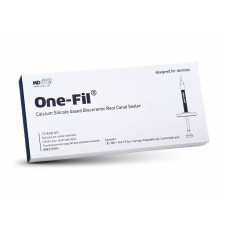
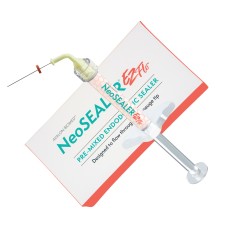
| Property | CeraSeal | NeoSealer Flo | One-Fil | TotalFill BC Sealer | AH Plus |
|---|---|---|---|---|---|
| Sealer Type | Premixed Calcium Silicate Bioceramic | Premixed Calcium Silicate Bioceramic | Premixed Calcium Silicate Bioceramic | Premixed Calcium Silicate Bioceramic | Epoxy Resin Sealer |
| Initial Setting Time (min) | 60 ± 5 | 480 ± 125 | Not evaluated | Not evaluated | 470 ± 5 |
| Final Setting Time (min) | 660 ± 60 | 1344 ± 60 | Not evaluated | Not evaluated | 1300 ± 60 |
| Radiopacity (mm Al) | 8.0 ± 0.5 | 5.5 ± 0.5 | Not evaluated | Published ISO-compliant values | 11.5 ± 0.5 |
| Flowability (cm) | 2.94 ± 0.09 | 1.88 ± 0.06 | Not evaluated | ISO-compliant | 2.96 ± 0.10 |
| Film Thickness (µm) | 70.7 ± 4.0 | 128.7 ± 8.1 | Not evaluated | ISO-compliant | 68.3 ± 2.9 |
| Open Pore Volume (cm³) | 0.024 ± 0.004 | 0.048 ± 0.003 | Not evaluated | Not evaluated | 0.0030 ± 0.0002 |
| Water Absorption (%) | 11.2 ± 3.6 | 33.0 ± 11.0 | Not evaluated | Not evaluated | 1.40 ± 0.20 |
| Solubility (%) | 1.02 ± 0.43 | 7.10 ± 3.5 | Not evaluated | Published long-term solubility data available | 0.80 ± 0.12 |
Source: Donnermeyer et al., International Journal of Molecular Sciences (2022).
Table 2 – Cement Composition & Active Ingredients
| Component | CeraSeal | NeoSealer Flo | One-Fil | TotalFill BC Sealer | AH Plus |
|---|---|---|---|---|---|
| Primary Sealer Class | Calcium Silicate Bioceramic | Calcium Silicate Bioceramic | Calcium Silicate Bioceramic | Calcium Silicate Bioceramic | Epoxy Resin |
| Tricalcium Silicate | 20–30% | ≈25% | Present* | Present* | None |
| Dicalcium Silicate | 1–10% | ≈10% | Present* | Present* | None |
| Calcium Aluminate | — | ≈25% | Present* | Not primary component | None |
| Tricalcium Aluminate | 1–10% | ≈5% | Present* | Not primary component | None |
| Grossite (Calcium Aluminum Oxide) | — | <6% | Not reported | Not reported | None |
| Main Radiopacifier | Zirconium Oxide (45–50%) | Tantalite (50%) | Zirconium Oxide* | Zirconium Oxide* | Calcium Tungstate + Zirconium Oxide |
| Hydraulic Cement Content | High | High | High* | High* | None |
| Bioactive Calcium-Silicate Matrix | Yes | Yes | Yes* | Yes* | No |
*Published manufacturer information confirms calcium-silicate bioceramic chemistry, however exact wt% composition was not reported in the referenced comparative study.
Table 3 – Clinical & Biological Characteristics
| Clinical Characteristic | CeraSeal | NeoSealer Flo | One-Fil | TotalFill BC Sealer | AH Plus |
|---|---|---|---|---|---|
| Bioactive Calcium Silicate Chemistry | Yes | Yes | Yes | Yes | No |
| Calcium Ion Release | Yes | Yes | Yes | Yes | No Significant Release |
| Alkalizing Activity | Yes | Yes | Yes | Yes | No |
| Apatite Formation Potential | Yes | Yes | Reported | Reported | Minimal |
| Hydraulic Setting Reaction | Yes | Yes | Yes | Yes | No |
| Biocompatibility | Excellent | Excellent | Excellent | Excellent | Good |
| Single-Cone Obturation Suitability | Excellent | Excellent | Excellent | Excellent | Good |
| Bioactive Mineral Interface Formation | Yes | Yes | Reported | Reported | No |
Why Many Clinicians Choose CeraSeal Over Other Bioceramic Sealers
- Higher tricalcium silicate content than many competing premixed sealers.
- One of the fastest setting bioceramic sealers reported in peer-reviewed studies.
- Highest flowability among the tested bioceramic sealers, supporting penetration into accessory anatomy.
- Lower film thickness than competing bioceramic sealers, supporting intimate adaptation to dentinal walls.
- Lower water absorption and lower solubility than NeoSealer Flo in direct laboratory testing.
- Ready-to-use premixed syringe with no hand mixing required.
- Strong calcium ion release and sustained alkaline pH characteristic of calcium-silicate bioceramic technology.
Scientific References
- Donnermeyer D, et al. Chemical-Physical Properties and Bioactivity of New Premixed Calcium Silicate-Bioceramic Root Canal Sealers. Int J Mol Sci. 2022;23(22):13914.
- Donnermeyer D, et al. Short and Long-Term Solubility, Alkalizing Effect, and Thermal Persistence of Premixed Calcium Silicate-Based Sealers: AH Plus Bioceramic Sealer vs TotalFill BC Sealer. Materials. 2022;15(20):7320.
- Additional manufacturer specifications and ISO 6876 compliant testing data where indicated.
Package Contents
- 1 × 2g CeraSeal Premixed Syringe
- 10 Intra-Canal Delivery Tips (depending on packaging version)
For the most accurate placement and material saving (of up to 87%), consider using MST Visco-Tips available here.
Video: CeraSeal Clinical Cases (from Saving the Natural Tooth Contest 2020)
Video: Warm vertical compaction bioceramic sealer Ceraseal endodontic Fast Fill / Fast Pack
Video: Warm vertical compaction using Ceraseal bioceramic sealer maxillary 2nd molar
Frequently Asked Questions
Is CeraSeal premixed?
Yes. CeraSeal is supplied in a ready-to-use syringe and requires no hand mixing.
Can CeraSeal be used with a single cone technique?
Yes. CeraSeal was specifically developed for hydraulic condensation and single-cone obturation protocols.
Does CeraSeal shrink after setting?
No. One of the major advantages of calcium silicate bioceramic sealers is their excellent dimensional stability.
What is the pH of CeraSeal?
CeraSeal exhibits a highly alkaline pH of approximately 12, creating an environment unfavorable to many endodontic pathogens.
Why are bioceramic sealers becoming increasingly popular?
Modern bioceramic sealers offer excellent biocompatibility, dimensional stability, hydraulic setting properties, and compatibility with simplified obturation techniques.
Reviews (0)
There are no reviews for this product.