£0.00
Checkout-29%
Special price



- Brand: Cerkamed
- Product Code: btr
- Availability: In Stock
£495.50
£700.00
- Product overview
- Reviews (0)
- Related products
BTR Pen – Broken Tool Remover for Fractured Endodontic Instruments
Designed by Endodontists for Endodontists
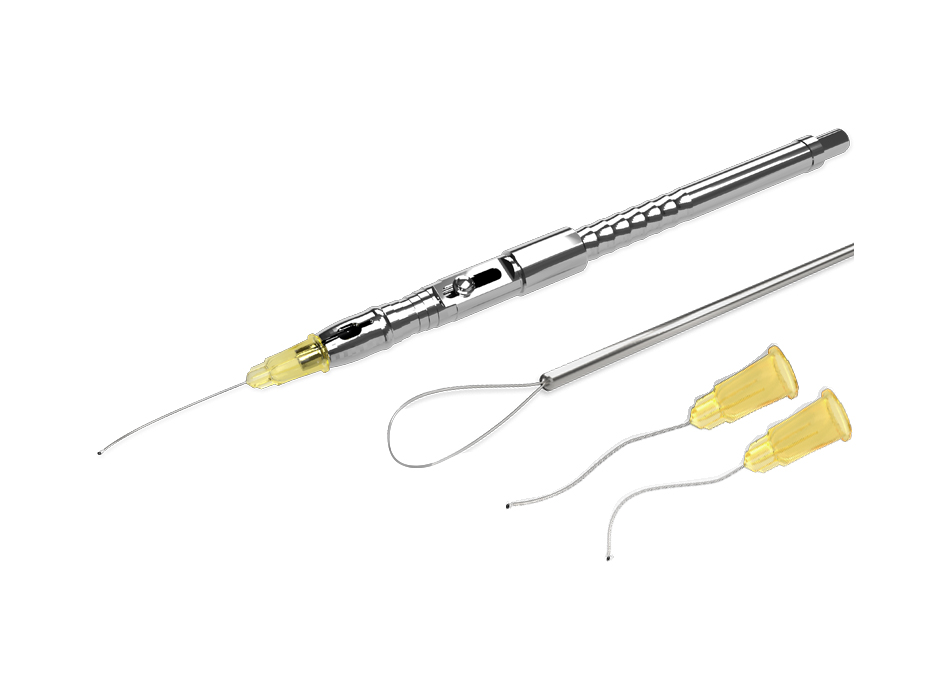
The BTR Pen (Broken Tool Remover) by Cerkamed is a loop-based retrieval system for removing fractured endodontic files from root canals. It pairs an ultrathin, highly elastic nitinol loop with a 0.3mm needle, so a broken instrument can be gripped and withdrawn even through a very small access channel in the canal. The aim is a predictable, repeatable procedure for separated instrument removal, with every component of the kit matched and built from high-quality materials.
Ultrathin tip of nitinol
The usage of the ultrathin and highly-elastic working tip, together with ultimate-endurance nitinol loop, makes it easy to get to the broken canal instrument. The tool allows certain grip and safe removal of the broken canal instrument regardless of its position in the canal.
Nitinol wire (the loop)
- pioneer material of the future, for medicine and dentistry, called "intelligent material"
- it shows the ability of shape memory - in an appropriate temperature it can go back to its original shape
- the wire's diameter is smaller than 0.1mm and the stretching resistance is in a range of thousands of megapascals (MPa)
Needle
- thinnest available on the market with diameter 0.3mm - the broken instrument can be removed even through a very small hole in a root canal.
Inside O-ring stabilising the body of the tool
- made of high-quality silicone VMQ, resistant to extreme temperatures from -55°C to 200°C
- the highest resistance to hot air, ozone, oxidising agents, UV radiation
- high resistance to ageing under the influence of water (doesn't show the change of hardness in Shore's scale of ageing in water - test 70 hours/100°C
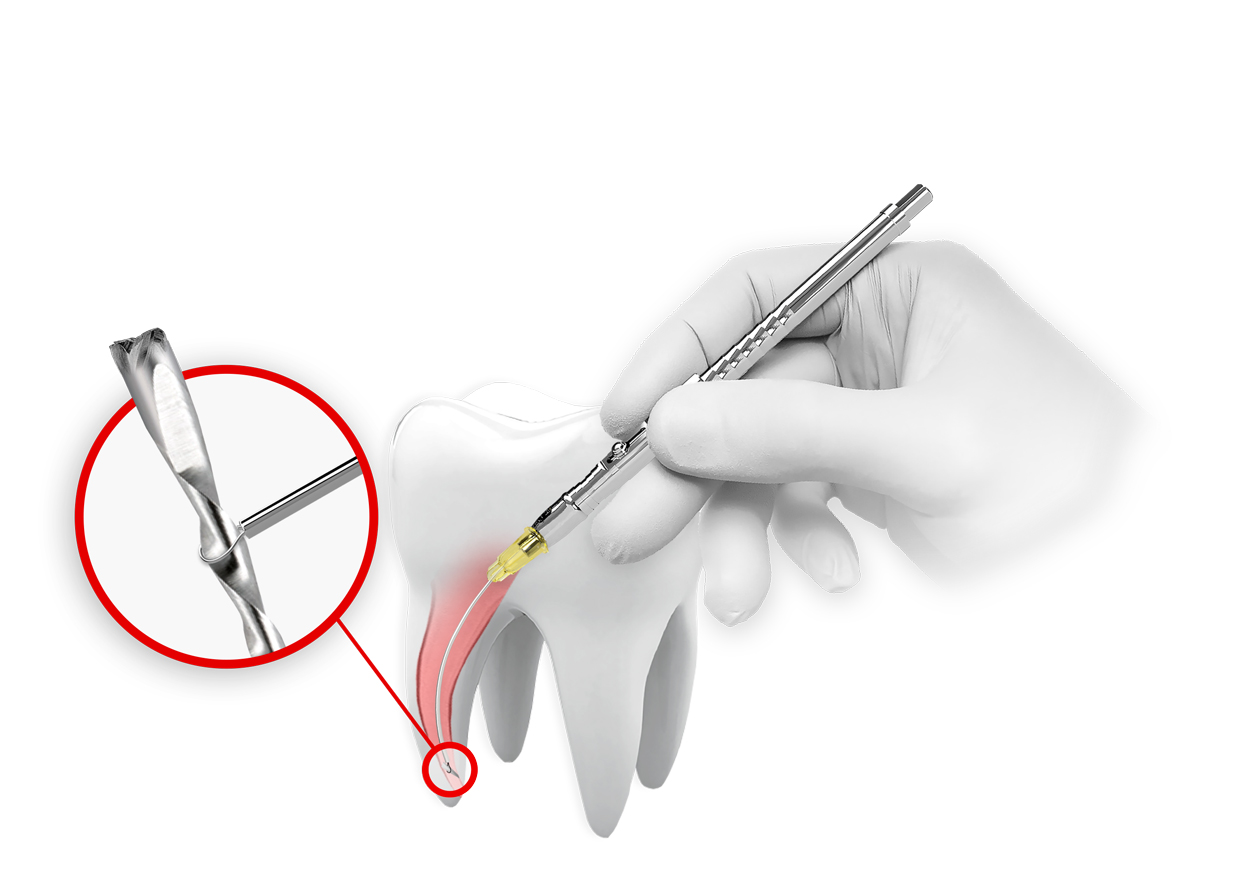
How the BTR Pen Works
The nitinol loop tip is slipped over the coronal end of the fractured fragment, tightened to grip it, and the instrument is then withdrawn from the canal. Because the loop and needle are so thin, it can be used when only a narrow channel has been created around the broken file. Nitinol's elasticity lets the loop pass through the channel and then close securely on the fragment. As with any retrieval technique, the practitioner first creates access to the coronal end of the fragment (typically with ultrasonic tips under magnification) before applying the loop.
Technical Specifications
| Brand / manufacturer | Cerkamed (Poland) |
| Loop material | Nitinol (shape-memory alloy), wire under 0.1mm |
| Needle diameter | 0.3mm, 0.4mm and 0.5mm |
| O-ring material | Silicone VMQ, resistant from -55°C to 200°C |
| Springs | Soft, medium (fitted) and hard |
| Product code | btr |

What's in the Set
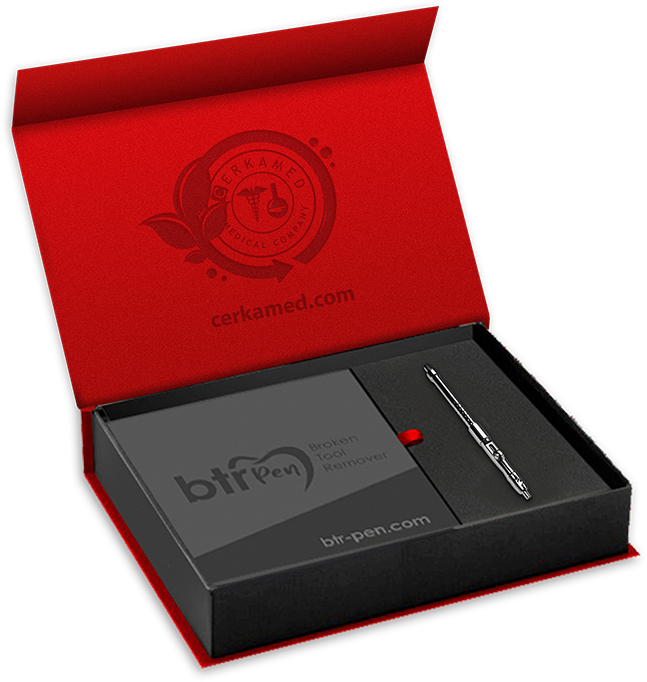
- BTR Pen tool – 1 pc
- BTR Pen calibrator – 1 pc
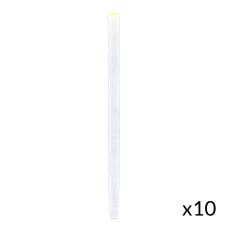
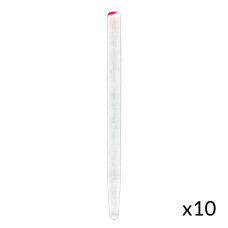
- BTR Pen tip with a loop – 5 pcs + 5 free of various sizes - A total of 10
- BTR Pen spring (soft and hard) – 2 pcs (a third, medium spring is already fitted to the tool)
- BTR Pen O-ring – 3 pcs
Clinical Research on the BTR Pen
The BTR Pen has been evaluated in several independent in vitro studies. A fair summary of the published evidence: it performs comparably to ultrasonic retrieval overall, with some studies reporting particular strengths in the apical third and low perforation risk.
- Dulundu & Helvacioglu-Yigit, Materials (2022) — 86.7% (52 of 60) of broken instruments were removed with the BTR Pen versus 83.3% with ultrasonics alone, with no significant difference between the two. In the apical region the BTR Pen achieved 86.7% against 70% for ultrasonics. Read the study
- CBCT-based comparison of ultrasonic, Masserann and BTR-Pen techniques (with dental microscope) — BTR-Pen achieved an 86.7% success rate, comparable to ultrasonics (90%) and higher than the Masserann technique (70%), with no perforations recorded in the BTR-Pen group. Read the study
- Comparison of three retrieval systems for fractured reciprocating files in maxillary first molars (J Pharm Bioallied Sci) — the BTR Pen retrieved files that neither the trephine bur system nor ultrasonic tips could retrieve from the apical third (30% versus 0%), and was successful in the majority of middle-third cases. Read the study
Note: these are in vitro studies. Success depends on the type, position and length of the fragment and on operator experience, and results should not be taken as a guarantee of outcome in an individual clinical case.
Video Demonstrations
More videos are available on the manufacturer's website: btr-pen.com
BTR Promo/Demo
BTR – Difficult case
BTR – Preparation to work
How to dismantle the BTR Pen
How to assemble the BTR Pen
Instruction Manual
Download the BTR Pen instruction manual (PDF)
Who Is the BTR Pen For?
The BTR Pen suits general dentists and endodontists who want a dedicated, loop-based option for retrieving separated NiTi rotary files and stainless steel K-files, either as a first-line approach or as a complement to ultrasonic retrieval under a dental operating microscope.
Frequently Asked Questions
- What is the BTR Pen used for?
- The BTR Pen (Broken Tool Remover) is used to retrieve fractured endodontic instruments, such as separated NiTi rotary files and K-files, from root canals using a thin nitinol loop that grips the broken fragment.
- How does the BTR Pen remove a broken file?
- After access to the coronal end of the fragment has been created, the ultrathin nitinol loop is placed over the fragment and tightened to grip it, and the fragment is then withdrawn from the canal. The 0.3mm needle allows this through a very small channel.
- How effective is the BTR Pen compared with ultrasonics?
- In published in vitro studies, the BTR Pen achieved success rates of around 87% and performed comparably to ultrasonic retrieval overall, with one study reporting a higher success rate in the apical region. Results vary with fragment type, position and operator experience. It is recommended to use ultrasonics and then BTR to make even higher sucess rate.
- What is included in the BTR Pen kit?
- One BTR Pen tool, one calibrator, 10 loop tips, soft and hard springs (a medium spring is fitted to the tool) and three O-rings.
- How thin is the BTR Pen needle and loop?
- The needle has a diameter of 0.3mm and the nitinol wire forming the loop is thinner than 0.1mm.
- Are instructions and training videos available?
- Yes. A PDF instruction manual and several demonstration videos, including assembly and dismantling guides, are available on this page, and more videos are on the manufacturer's website.
Reviews (0)
There are no reviews for this product.