£0.00
Checkout-29%
Special price



- Brand: Cerkamed
- Product Code: btr
- Availability: In Stock
£495.50
£700.00
- Product overview
- Reviews (0)
- Related products
BTR Pen – Broken Tool Remover for Fractured Endodontic Instruments
Designed by Endodontists for Endodontists
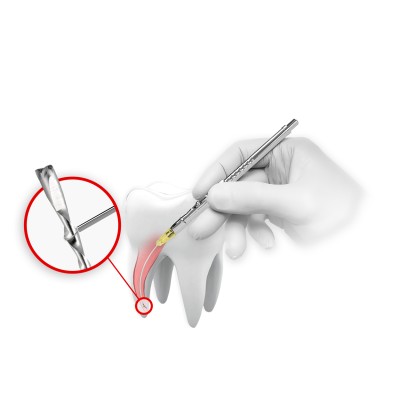
The BTR Pen (Broken Tool Remover) by Cerkamed is a loop-based retrieval system for removing fragments of broken endodontic instruments from the root canal. A reusable stainless steel tool is used together with a compatible, single-use nitinol loop tip: the loop is placed around the exposed fragment, tightened to grip it, and the fragment is withdrawn in a controlled way. Designed by endodontists for endodontists, it gives a predictable, repeatable option for separated instrument removal in retreatment cases, including fragments in narrow or curved canal spaces where access is limited.
Key Features
- Ultrathin, highly elastic nitinol loop (wire diameter under 0.1mm) for a secure grip on the fractured fragment
- Three loop tip sizes: Ø0.3mm, Ø0.4mm and Ø0.5mm, so the tip can be matched to canal access, fragment size and curvature
- 0.3mm needle — the thinnest on the market, allowing retrieval through a very small channel in the root canal
- Reusable stainless steel tool with single-use nitinol loop tips
- Shape-memory nitinol wire with very high tensile strength
- Silicone VMQ O-ring stabilising the tool body, resistant to temperatures from -55°C to 200°C, hot air, ozone, oxidising agents and UV radiation
- Interchangeable springs (soft, medium and hard) to tune the tool to the case
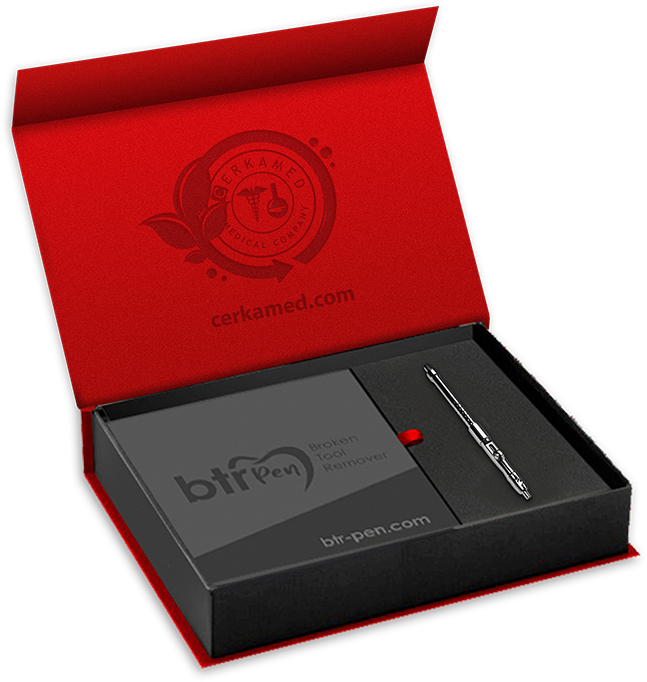
- Complete kit — tool, calibrator, loop tips, springs and O-rings in one box
- Peer-reviewed in vitro evidence — see the research section below
How the BTR Pen Works
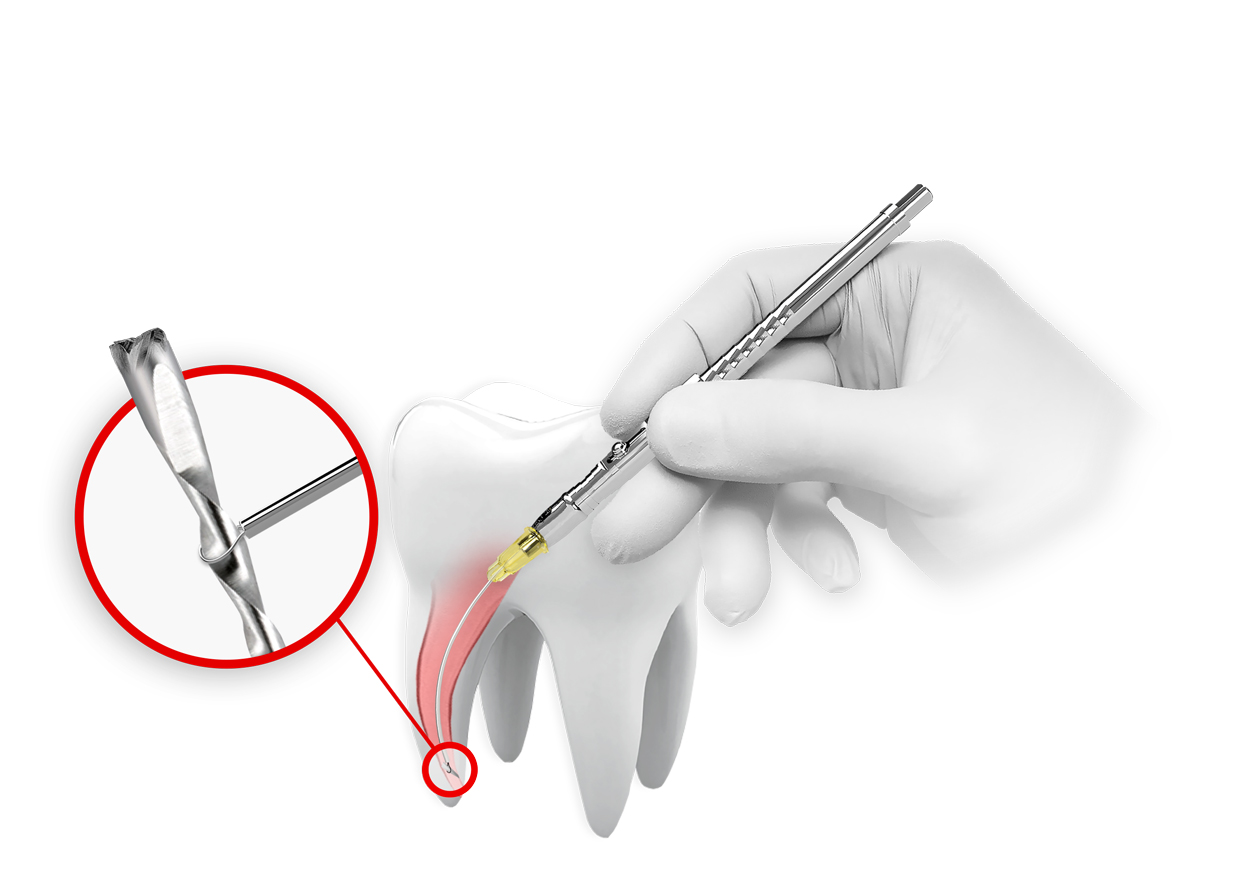
The nitinol loop tip is slipped over the coronal end of the fractured fragment, calibrated and tightened to grip it, and the instrument is then withdrawn from the canal. Because the loop and needle are so thin, it can be used when only a narrow channel has been created around the broken file, and nitinol's elasticity lets the loop pass through that channel and then close securely on the fragment. As with any retrieval technique, the clinician first needs adequate straight-line access and coronal exposure of the fragment (typically created with ultrasonic tips under magnification and rubber dam isolation).
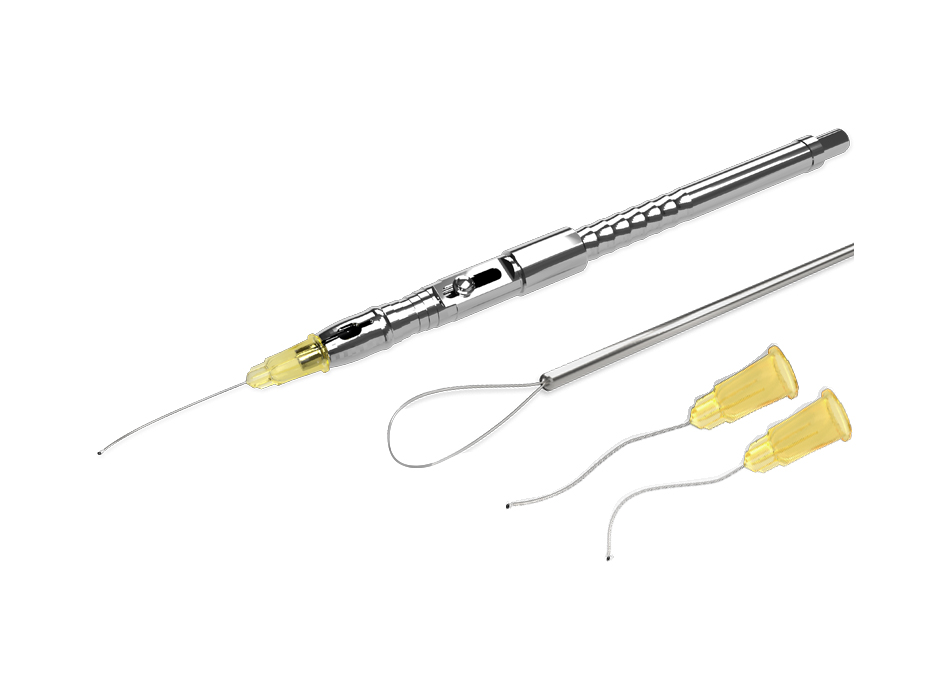
Loop Tip Sizes
BTR loop tips are available in three diameters. The full kit includes five Ø0.3mm tips; choose the tip size according to canal access, fragment size, canal curvature and the amount of coronal exposure achieved.
| Tip Diameter | Best suited to |
|---|---|
| Ø0.3mm | Narrower canals and more restricted access (five tips supplied in the full kit) |
| Ø0.4mm | General broken file retrieval, a mid-size option |
| Ø0.5mm | Larger canals, or where more loop control is needed and anatomy allows access |
Technical Specifications
| Brand / manufacturer | Cerkamed (Poland) |
| Tool material | Stainless steel, reusable |
| Loop material | Nitinol (shape-memory alloy), wire under 0.1mm, single-use tips |
| Loop tip diameters | Ø0.3mm, Ø0.4mm, Ø0.5mm |
| Needle diameter | 0.3mm |
| O-ring material | Silicone VMQ, resistant from -55°C to 200°C |
| Springs | Soft, medium (fitted) and hard |
| Supplied | Non-sterile |
| Use | For dentist use only |
| Product code | btr |

What's in the Set
- BTR Pen stainless steel tool – 1 pc
- BTR Pen calibrator – 1 pc
- BTR tip with loop, Ø0.3mm – 5 pcs + 5 additional tips with loop in various sizes (as extra free)
- BTR springs (soft and hard) – 2 pcs (a third, medium spring is already fitted to the tool)
- Silicone BTR O-rings – 3 pcs
Typical Clinical Uses
- Retrieval of separated NiTi rotary files
- Removal of broken hand files
- Endodontic retreatment cases
- Retrieval after ultrasonic loosening of the coronal part of the fragment
- Cases where bypassing the fragment is not possible or not preferred
Handling, Cleaning and Sterilisation
- Inspect before every use for contamination, cracks, bends, splits and deep scratches; damaged parts reduce instrument life and performance
- Loop tips are single-use and supplied non-sterile — sterilise in an autoclave before use, without the protective cup, and follow the autoclave manufacturer's instructions
- The BTR Pen must be disassembled before sterilisation. Clean new and used instruments with a soft, non-scratching brush and instrument cleaning solution (ultrasonic cleaning is also recommended), rinse with purified water and dry thoroughly before sterilising
- Recommended steam autoclave cycles: 134°C for at least 5 minutes, or 121°C for at least 20 minutes
- The calibrator is reusable — disinfect it with isopropyl alcohol and inspect it before each use; a blunt or bent calibrator needle makes it difficult to calibrate the loop accurately
- Storage: a clean, dry place at 5–30°C with relative humidity below 70%
- Avoid excessive dentine removal, over-extensive ultrasonic staging or uncontrolled force during retrieval, which can increase the risk of ledging, perforation, transportation or root weakening
Clinical Research on the BTR Pen
The BTR Pen has been evaluated in several independent in vitro studies. A fair summary of the published evidence: it performs comparably to ultrasonic retrieval overall, with some studies reporting particular strengths in the apical third and low perforation risk.
In many broken instrument cases, ultrasonic tips are first used to expose and loosen the coronal portion of the fragment. The BTR loop can then be positioned around the fragment to create a controlled grip for retrieval. Dentine preservation is important. Excessive staging or ultrasonic use can weaken the root, so the retrieval approach should be carefully planned and combined ultrasonic + BTR is the most recommended and successful method.
- Dulundu & Helvacioglu-Yigit, Materials (2022) — 86.7% (52 of 60) of broken instruments were removed with the BTR Pen versus 83.3% with ultrasonics alone, with no significant difference between the two. In the apical region the BTR Pen achieved 86.7% against 70% for ultrasonics. The study also assessed the effect of removal on the fracture resistance of roots. Read the study
- CBCT-based comparison of ultrasonic, Masserann and BTR-Pen techniques (with dental microscope) — BTR-Pen achieved an 86.7% success rate, comparable to ultrasonics (90%) and higher than the Masserann technique (70%), with no perforations recorded in the BTR-Pen group. Read the study
- Comparison of three retrieval systems for fractured reciprocating files in maxillary first molars (J Pharm Bioallied Sci) — the BTR Pen retrieved files that neither the trephine bur system nor ultrasonic tips could retrieve from the apical third (30% versus 0%), and was successful in the majority of middle-third cases. Read the study
Note: these are in vitro studies. Success depends on the tooth, canal anatomy, and the type, position and length of the fragment, as well as operator training and experience, and results should not be taken as a guarantee of outcome in an individual clinical case.
Video Demonstrations
More videos are available on the manufacturer's website: btr-pen.com
BTR Promo/Demo
BTR – Difficult case
BTR – Preparation to work
How to dismantle the BTR Pen
How to assemble the BTR Pen
Manuals and Downloads
- BTR Pen instruction manual (PDF)
- BTR Pen user manual – Cerkamed, updated April 2026 (PDF)
- Work methodology with the BTR Pen – Cerkamed (PDF)
- BTR Pen instructions for use – Cerkamed (PDF)
Manufacturer's product page: cerkamed.com and https://btr-pen.com/
Who Is the BTR Pen For?
The BTR Pen suits dentists and endodontists who want a dedicated, loop-based option for retrieving separated NiTi rotary files and stainless steel K-files, either as a first-line approach or alongside ultrasonic retrieval under a dental operating microscope. It is for dentist use only.
Frequently Asked Questions
- What is the BTR Pen used for?
- The BTR Pen (Broken Tool Remover) is used with a compatible nitinol loop tip to remove fragments of broken endodontic instruments, such as separated NiTi rotary files and hand files, from the root canal.
- How does the BTR Pen remove a broken file?
- After access to the coronal end of the fragment has been created, the ultrathin nitinol loop is placed over the fragment, calibrated and tightened to grip it, and the fragment is then withdrawn from the canal. The 0.3mm needle allows this through a very small channel.
- Which BTR tip sizes are available?
- Loop tips are available in Ø0.3mm, Ø0.4mm and Ø0.5mm. The full kit includes five Ø0.3mm tips.
- Where can I buy additional Loop tips?
- They can be ordered here.
Are BTR tips reusable or sterile?
No. The nitinol loop tips are single-use and are supplied non-sterile, so they must be sterilised before use, without the protective cup, following the autoclave manufacturer's instructions.
- How should the BTR Pen be sterilised?
- Disassemble the BTR Pen, clean and rinse it, dry it thoroughly, then sterilise it in a steam autoclave at 134°C for at least 5 minutes or 121°C for at least 20 minutes, in line with national requirements.
- Should ultrasonic tips be used before the BTR Pen?
- Often, ultrasonic tips are used first to expose and loosen the coronal part of the fragment, after which the loop is positioned around it. The best sequence depends on the individual case and the clinician's protocol.
- How effective is the BTR Pen compared with ultrasonics?
- In published in vitro studies, the BTR Pen achieved success rates of around 87% and performed comparably to ultrasonic retrieval overall, with one study reporting a higher success rate in the apical region. Results vary with fragment type, position and operator experience, and no instrument can guarantee removal in every case.
- What is included in the BTR Pen kit?
- One stainless steel BTR Pen tool, one calibrator, five Ø0.3mm loop tips, soft and hard springs (a medium spring is fitted to the tool) and three silicone O-rings.
- Who should use the BTR Pen?
- The BTR Pen is for dentist use only, and is best suited to clinicians with suitable endodontic training, magnification and experience in broken instrument management.
Reviews (0)
There are no reviews for this product.